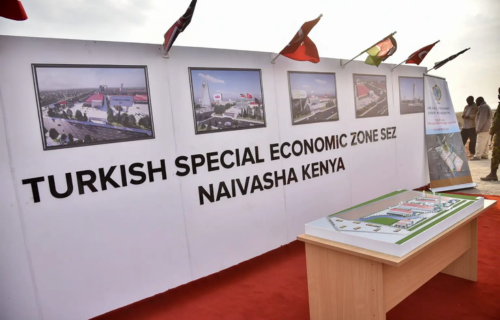
Read through an in-depth industry briefing prepared by the African Circular Business Alliance (ACBA) as Knowledge Partner for Big 5 Construct Kenya.
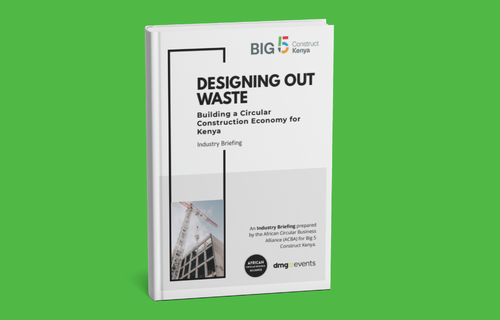
DP World and Kenya-based GulfCap Africa have signed a joint venture Shareholders Agreement to advance the development of the Mombasa Industrial Park. Planned as a 222-hectare Special Economic Zone (SEZ), the strategic megaproject brings integrated industrial capacity and end-to-end logistics infrastructure directly to East Africa’s primary trade gateway.
The initial development phase covers 40 hectares of civil construction and specialized industrial warehousing. Designed to expand local manufacturing and reduce regional production costs, the state-of-the-art zone features multimodal supply chain connections, enabling tenant businesses to leverage international trade agreements like the AfCFTA, EU-EPA, and UAE-CEPA.
With supporting infrastructure backed by the Kenyan government, the greenfield SEZ has already attracted interest from over 60 local and international companies. Upon full completion, the master-planned industrial hub is projected to generate more than 20,000 direct and indirect jobs.
Source: Emirates News Agency - WAM
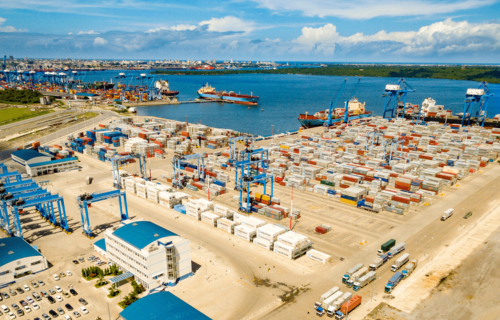
The Kenyan government is accelerating national road infrastructure upgrades to improve connectivity between agricultural regions, urban centers, and essential services. Managed by KeNHA, KURA, and KeRRA, the nation's road construction agenda focuses on paving rural links, dual-carriageway expansions, and heavy highway rehabilitation to alleviate severe urban congestion and prevent rain-related transport disruptions.
These ongoing civil engineering projects prioritize inter-county economic integration, streamlining the movement of goods between producers and commercial markets. Additionally, the infrastructure push emphasizes local workforce engagement, creating significant sub-contracting and employment opportunities for local engineers, equipment operators, and material suppliers across the domestic building sector.
To safeguard these capital investments, public road agencies are prioritizing long-term routine maintenance, drainage engineering, and enhanced traffic management systems. Ensuring durable road conditions remains central to driving long-term socio-economic growth and regional trade expansion across Kenya.
Source: Mjengo Hub
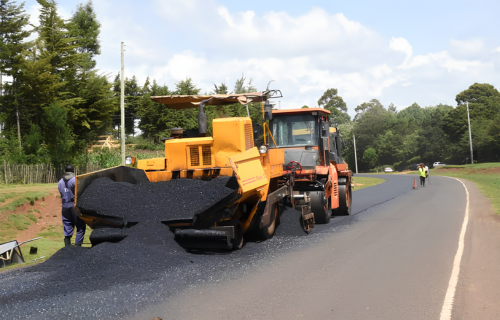
Key stakeholders across Kenya’s construction sector are advancing initiatives to formalize the nation's artisan (fundi) workforce. Led by the National Construction Authority (NCA) and industry partners, the drive establishes formal technical training, safety compliance, and official certification pathways for experienced workers who acquired their skills through informal apprenticeships.
Collaborative programs- including the BioTank Africa Fundi Forum- are partnering with technical institutions and universities to enable Recognition of Prior Learning. This mechanism formally assesses existing practical skills, offering artisans a clear gateway into the structured economy while upskilling them on modern construction technologies, occupational safety, and building regulations.
By professionalizing artisans, industry leaders aim to elevate overall building standards and ensure public health compliance, particularly across expanding infrastructure hubs like Kitengela. The broader framework also integrates training on workplace wellness, ethics, and tax compliance to empower workers as qualified contractors.
Source: The Star
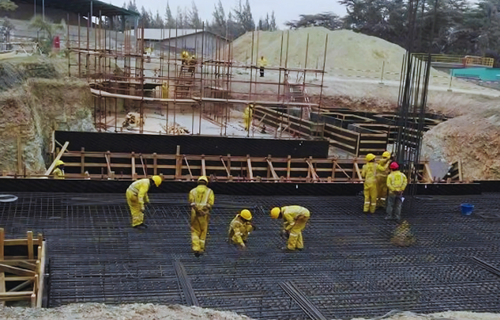
Lamu County, Kenya, is poised for massive economic transformation driven by a $100 million palm oil processing plant and a $16 billion multi-trillion shilling petroleum refinery project. The agricultural initiative, located at Witu Nyangoro Ranch, directly targets Kenya’s $1 billion import bill by boosting local production, creating roughly 3,000 jobs, and stimulating surrounding transport and logistics ecosystems.
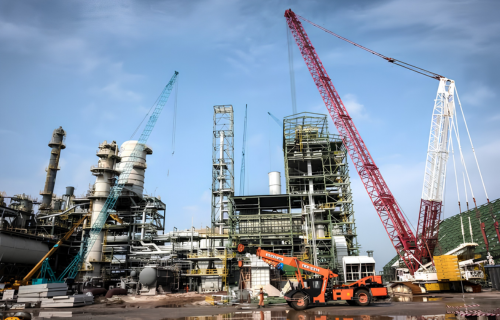
Concurrently, preparations are in advanced stages for the landmark Dangote petroleum refinery, which will feature a processing capacity of 700,000 barrels per day. The major energy build aims to secure domestic fuel independence while serving as a strategic hub supplying petroleum products across East Africa.
From a construction perspective, initial site preparation for the refinery- including extensive engineering and soil testing- is slated for an October 2026 groundbreaking, with an estimated four-year build schedule. Together, these complementary mega-projects establish critical industrial infrastructure that will reshape Lamu into a regional trade powerhouse.
Source: Business Insider Africa
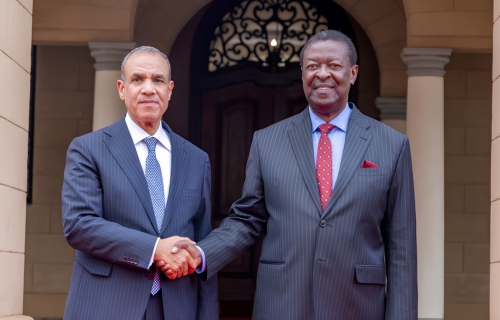
Egypt has proposed a $100 million financing mechanism to fund dam construction and water infrastructure development in Kenya. Finalized during official diplomatic meetings in Nairobi, this massive funding initiative directly supports Kenya's regional water security and climate resilience.
The $100 million facility will target critical groundwater extraction, rainwater harvesting, and multi-purpose dam projects, including the proposed Koru Dam. Implementation remains strictly conditional on compliance with international law to safeguard downstream flows within the shared Nile Basin.
This initiative expands the 2025 Egypt-Kenya Comprehensive Strategic Partnership, which also targets a joint maritime shipping line linking Red Sea ports with Mombasa and Lamu. Technical project reviews will be finalized at the upcoming Joint Commission session in Cairo
Source: Smart Water Magazine
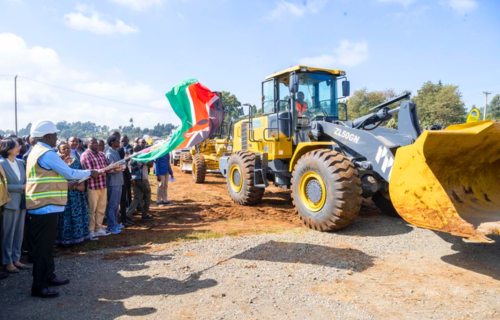
On November 28, 2025, President William Ruto officially broke ground on the Rironi–Mau Summit Road project at Kamandura, Kiambu County. This landmark infrastructure development, valued at USD 863 million, covers Phase I of the Nairobi–Nakuru–Mau Summit (A8) and the Nairobi–Maai Mahiu–Naivasha (A8 South) corridors. Spanning 139 kilometers from Nairobi to Gilgil and Naivasha, the project is slated for a two-year construction period followed by a 28-year operational phase, marking a significant step in modernizing Kenya’s primary transit routes.
The project is being implemented through a strategic Public-Private Partnership (PPP) between the China Road and Bridge Corporation (CRBC) and the National Social Security Fund (NSSF). President Ruto emphasized that this model represents "smart governance," allowing the state to deliver critical infrastructure without increasing the national debt burden or raising taxes. By leveraging private capital and NSSF's investment, the government aims to bypass traditional budgetary constraints and accelerate the "Kenya reborn" vision through high-impact industrial collaboration.
Beyond local transit, the highway serves as a vital regional gateway linking East Africa to the Western and Northern corridors. The upgrade includes grade-separated interchanges, overpasses, and underpasses designed to enhance safety and lower vehicle operating costs. By facilitating the seamless movement of agricultural produce and international trade, the project directly supports Kenya Vision 2030 and the Bottom-Up Economic Transformation Agenda (BETA), solidifying the nation’s standing as the leading trade and transport hub in the region.
Source: Ministry of Roads and Transport
Nairobi’s transport landscape is set for a major boost as the Ministry of Roads announces the accelerated completion of the Ngong Road Bridge, now projected for July 2026- over a year ahead of schedule. Funded by a $20mn concessional loan from the Spanish government with a 55-year repayment period, the project utilizes preassembled steel modules to fast-track installation. Once operational, the bridge will significantly reduce travel times and improve access to the upcoming Talanta Stadium, a key venue for national and sporting events currently under construction along the same route.
Simultaneously, works have resumed on the $23mn Kenyatta Avenue viaduct after a three-year stall. This revival was made possible through the government’s innovative road securitization program, which leverages the Road Maintenance Levy Fund to unlock stalled projects. Fully funded by the Government of Kenya, the viaduct is slated for completion by May 2027. It aims to provide a seamless link between Nairobi’s Central Business District and the Upper Hill area, addressing chronic congestion in the city’s core.
These urban projects are designed to complement Kenya’s larger mobility goals, including the monumental Nairobi-Mombasa Usahihi Expressway. The strategic importance of these developments is underscored by the recent addition of UK-based Turner & Townsend to the Usahihi consortium, joining Everstrong Capital and KeNHA. By integrating localized bridge works with massive highway expansions, the government intends to enhance national competitiveness and transform Nairobi into a more efficient regional transport and logistics hub.
Source: Construction Review Online
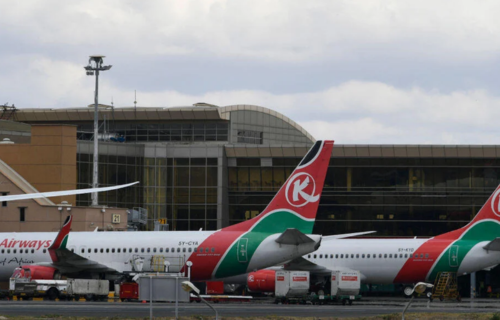
President William Ruto has announced plans to break ground on a modern, world-class airport at Jomo Kenyatta International Airport (JKIA) before the end of 2026. This initiative aims to solidify Kenya’s position as a regional aviation hub while bolstering national trade and tourism. The government is committed to fast-tracking the project, viewing expanded infrastructure as a critical driver for economic growth and strengthened regional connectivity.
According to the Kenya Airports Authority (KAA), the development is essential to address chronic congestion. In 2025, JKIA handled 8.6 million passengers, significantly surpassing its original design capacity of 7.5 million. By expanding facilities, the KAA intends to bring the airport’s operations in line with modern demand and international standards, ensuring the gateway can accommodate the rising volume of regional travelers.
The new plan represents a renewed, independent effort to modernize East Africa’s primary transport hub, ensuring it remains competitive and capable of anchoring the region’s aviation sector for the next decade.
Source: Aviation Week
Construction has officially commenced on a USD 760mn Turkish Industrial Complex within a dedicated Special Economic Zone (SEZ) in Nakuru, Kenya. Developed by Turkish Industry Holding, the 100-acre project represents one of the most significant industrial investments in the region. The complex will house six specialized factories designed to produce high-end construction materials, including granite, ceramic tiles, cement, steel, and aluminum profiles, alongside forestry and cleaning products.
The facility is engineered with a heavy focus on international trade, with 70% of its total output earmarked for export to European and U.S. markets. According to Board Chairman Mehmet Coskun, the remaining 30% will be supplied to the local Kenyan market to support domestic infrastructure needs. Once fully operational, the SEZ is expected to facilitate the export of over 500 containers daily through the Port of Mombasa, providing a massive Sh 60bn boost to the national economy.
The project is slated for completion within 30 months and marks a milestone for local leadership with the appointment of 36-year-old Kenyan Mwaniki Munuhe as Vice President. Munuhe will oversee African operations as the firm seeks to establish the largest construction materials manufacturing hub in the region. This development is expected to significantly enhance Kenya’s manufacturing capacity, reduce reliance on imported materials, and strengthen the country’s position as a global industrial exporter.
Source: TCGT Kenya